Tuesday, September 1, 2020

How Cannabis Helped Me Beat My Alcoholism


  Ask anyone in Alcoholics Anonymous (AA) to read that headline and I’d bet you a bag of nickels that their reaction would be one of extreme fear coupled with a sense of creeping self-doubt.

  I’m proud of who I am. I’m a halfie — half Puerto Rican and half Brooklyn Italian. I get my soul / connection to my Taino ancestors from my Rican side, and I get my addictions and legacy of dysfunction from that side as well.


  From the beginning I knew life was going to be hard. I accepted it and was fortunate to glean a lifetime of knowledge on what it was like to struggle — -and struggle I did — hardcore.

Essay: This is How Cannabis Helped Me Beat My Alcoholism

  Ask anyone in Alcoholics Anonymous (AA) to read that headline and I’d bet you a bag of nickels that their reaction would be one of extreme fear coupled with a sense of creeping self-doubt.

  I’m proud of who I am. I’m a halfie — half Puerto Rican and half Brooklyn Italian. I get my soul / connection to my Taino ancestors from my Rican side, and I get my addictions and legacy of dysfunction from that side as well.


  From the beginning I knew life was going to be hard. I accepted it and was fortunate to glean a lifetime of knowledge on what it was like to struggle — -and struggle I did — hardcore. Read more at My Cannabis Health

Monday, August 31, 2020

Sanjay Gupta Goes To Israeli Labs For Breaking Research

  As the rest of the world continues to debate the benefits of cannabis and an increasing number of countries pass legislation to make it legal for medicinal and scientific purposes, it is inevitable that more research will be undertaken to determine the effectiveness of cannabis-based medicines in treating even more conditions, from every day illness to chronic diseases.

  Meanwhile, Israel has been quietly turning itself into a world-leading center with its own medical marijuana research programme. Described by Dr. Sanjay Gupta as ‘the marijuana research capital of the world’, Israel has been conducting research into marijuana since the 1960s and is home to the world’s largest medical marijuana production, research and development facility.
  The man widely regarded as the grandfather of medical marijuana research, is Raphael Mechoulam, a professor at Hebrew University in Jerusalem who was the first to isolate, analyze and synthesize the major psychoactive and non-psychoactive compounds in cannabis, and develop a number of marijuana-related treatments. 

Sunday, August 30, 2020

Israeli Cannabis Research Leads The World


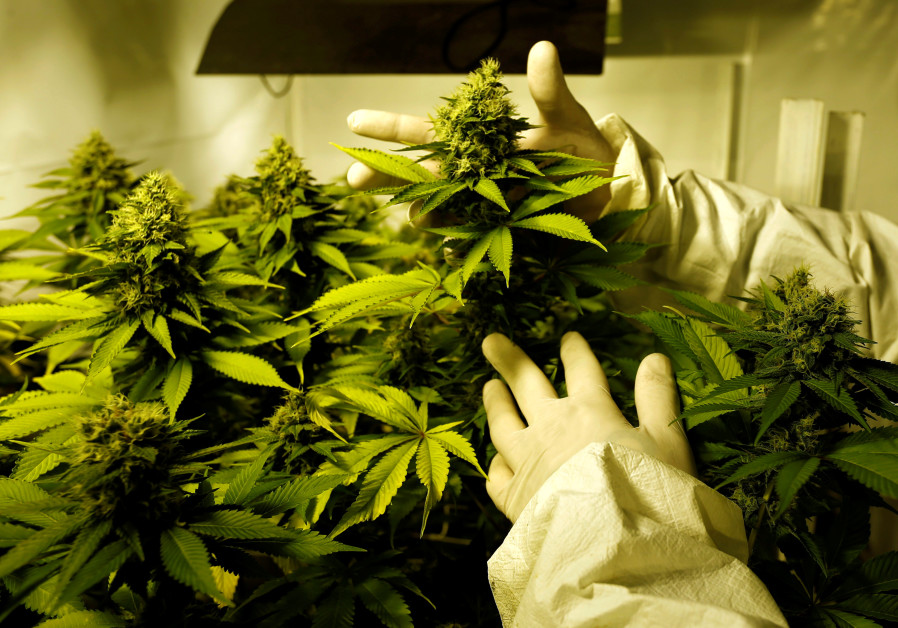
Marijuana plants. (photo credit: REUTERS)

A HIGHER CALLING: HOW ISRAELI MARIJUANA RESEARCH CHANGED THE WORLD
“The problem is that for many years, marijuana was put on the [same] scale as cocaine and morphine.”

JUNE 19, 2018 21:58

As much of the world debates how to address marijuana use, the vast majority of American states have legalized it or allow it for medical purposes. Global pharmaceutical companies and hospitals seeking effective treatments using cannabis should look to Professor Raphael Mechoulam, a scientist at Hebrew University. Mechoulam, a pioneer in the field, was the first to isolate, analyze and synthesize the major psychoactive and non-psychoactive compounds in cannabis and has developed a number of revolutionary marijuana-related treatments.

Today, roughly 147 million people use medical marijuana for effective relief of various ailments, including AIDS, multiple sclerosis, Crohn’s disease, cancer treatment side effects and Parkinson’s. Experts believe these numbers will grow exponentially in the coming years, and Mechoulam is now widely recognized as the godfather of medical marijuana, the high priest of his field.

Saturday, August 29, 2020

Testimonies of Healing At the Legislature

  Oklahomans Shawn Jenkins & Ray Jennings addressed a packed hall at the Oklahoma State legislature on Wednesday, July 25th. Jenkins told of his son's severe health needs and how cannabis medicines have greatly improved his health, development, and quality of life.
 Ray Jennings told of his fight with stage 4 cancer and how his family convinced him to try cannabis medicines when he was near death.
  The State Health Dept. soon after appointed Jennings to the Food Safety & Packaging board for the Medical Marijuana Authority.
  Jennings goes into further details in this home video.

Friday, August 21, 2020

Lou Gehrig's Disease & Cannabis

Cathy Jordan of Florida – Lou Gehrig’s Disease (ALS )

I used to be a hairdresser from New Castle, DE, but now I’m a medical marijuana patient & activist, living near Tampa, FL.

I was diagnosed with Amyotrophic Lateral Sclerosis (ALS or “Lou Gehrig’s Disease”) in 1986 (I was 36), was told by my doctor not to smoke anything, standard advice for a new ALS patient, suffered typical deterioration of my body over the next two years and prepared for my death – ALS is a terminal illness and I probably had only another year or two.

Then, in 1989, standing on a beach in Sarasota, FL, I was passed a “joint” and said “Why not?” After just a few puffs, I had a wonderful feeling – that my disease had stopped! I’ve been smoking ever since – for twenty-one years now, and I think I’m aging quite well, thank you.

Cannabis (the scientific name for marijuana) works for me by drying up my saliva (ALS patients often drown in their own fluids), helping me cough and stimulating my lungs through its bronchodilation action.
Read More..

Thursday, August 20, 2020

Breast Cancer Recovery With Cannabis


Brenda L. of Ohio: Breast Cancer

“Eight years ago, Brenda was diagnosed with breast cancer. It was in stage I when they found it. She underwent the lumpectomy and sentinel node biopsy.
A lumpectomy is where just the tumor is removed as well as the normal breast tissue that closely surrounds the tumor. Sentinel node refers to the first lymph node(s) that drains from the breast tumor area (found by injecting a radioactive dye).

“They shoot radiation into your breast and they follow it up to the nodes to make sure that you don’t have cancer in your lymph nodes. And I did not, so all I had to have was radiation…and hormone therapy. Because my cancer was fed by the estrogen.”

Tamoxifen is used to treat certain types of breast cancer that require estrogen to grow. It’s often used following surgery and radiation. (Drugs.com can provide more information on this line of treatment.)

Read More..